
TMH Q&A with Bugra Demirel
- Bugra Demirel

- Nov 11, 2025
- 8 min read
Updated: Nov 11, 2025
A conversation about Grow Tallahassee, the FSU–TMH partnership, and the future of healthcare in our community.

Q1. You’ve been at the helm of Grow Tallahassee for some time now. How did this initiative begin?
Bugra Demirel: Grow Tallahassee started around 2018 as a networking group of people who were tired of watching our city fall behind in economic development. We saw so much potential here, talented people, great universities, and a strong sense of community, but too often, progress got buried under short-term politics. The goal was simple, bring together business leaders, professionals, and residents who want to move Tallahassee forward in a positive, fact-based way.
Q2. Let’s talk about the ongoing discussions surrounding Tallahassee Memorial HealthCare. Why has Grow Tallahassee decided to get involved in the TMH–FSU partnership conversation? And why?
Bugra Demirel: We’ve been part of this conversation for about six months now, talking to all parties simultaneously. We’ve had great discussions with former TMH board members, TMH’s PR team, city officials, and FSU’s academic leadership. Early on, we believed the process was moving forward peacefully and that everyone was acting in good faith. But about a month ago, when we started seeing bad actors trying to spin this into a political fight, organization decided to get involved publicly. That’s when I wrote my initial op-ed, to bring the focus back to facts, progress, and what’s best for the community.
Q3. You’ve mentioned there are “other players” behind the scenes. Who are they, and how do they factor into what’s happening?
Bugra Demirel: There are definitely other players influencing this conversation, and not all of them are coming from a place of community interest. You have political consultants, PR firms, and individuals with personal or financial agendas trying to steer the narrative. Some of them are tied to elected officials, some to hospital leadership, and others to old power circles in town. They’re using media and social networks to frame this as a political issue instead of what it really is: a healthcare and quality-of-life issue for the people of Tallahassee.
Follow up: Do you want to name who they are?
Bugra Demirel: Not now. My goal is to deescalate the current Public Relations battle and get this deal done for the community.

Q4. Recently, Grow Tallahassee sent out a text poll about the FSU–TMH partnership. What was the goal of that poll?
Bugra Demirel: The goal was simple, to understand how the broader community actually feels about this partnership. We’ve heard a lot of loud opinions from a small circle, but we wanted data that reflects what everyday Tallahassee residents think. More than 5,000 people responded, and among those who expressed an opinion, over 80% supported the creation of an academic medical center under FSU Health. That tells me people are ready for change and want better healthcare options right here at home.
Q5. Critics have called it a “push poll.” How do you respond to that?
Bugra Demirel: That’s just not true. We presented a fact and asked people for their response, that’s not manipulation, that’s how polling works. If “leading with a fact” is considered a push poll, then the Sachs Media poll is also invalid, because they had at least two questions that led with factual context. Now, TMH can argue whether a “D” rating equals “two stars out of five,” but the bottom line is simple, nothing in our poll was misleading or opinionated. We just asked the community what they think based on the current rating, and the results spoke for themselves.
Q6. There’s a perception among some that Grow Tallahassee is taking an aggressive stance against TMH leadership. Is that fair?
Bugra Demirel: I don’t think it’s fair. We’re not against TMH leadership, we’re for better healthcare. There’s a big difference. It’s not easy to run a large hospital, and I respect and applaud all the accomplishments they’ve achieved to date. But right now, it’s my understanding that TMH leadership is divided. There are those who want to see this FSU partnership completed fast and in a positive way, and others who still haven’t made peace with the fact that dynamics are changing in that boardroom. It’s time to make way for progress. What this community is asking from them is to do the right thing. We’ll always recognize the great work done in the past, but we also deserve better care, not two out of five stars, but five out of five. At the very least, that should be the goal.

Q7. Some online comments suggest you might have an ulterior motive — that perhaps FSU or another party is paying you to do this work. What’s your response?
Bugra Demirel: That’s just silly. No one is paying me, and Grow Tallahassee doesn’t take a dime from the City, FSU, or TMH. We don’t need the money. This is all volunteer-driven. Too often, people are manipulated to focus on the messenger instead of the facts. To this day, nothing I’ve said has been speculation or spin. Remember the bad actors I didn’t name earlier? They need the public’s attention to shift away from healthcare and toward political drama and conspiracy theories. That’s what they get paid to do.
On the contrary, I think TMH should be the one disclosing which PR professionals they’ve hired on this issue. The easiest thing for me to do would be to stay silent and avoid criticism, but silence doesn’t solve problems. And honestly, if Grow Tallahassee doesn’t do it, who will? The chambers? The nonprofits? They’re all conflicted out of this discussion. Right now, there’s not a single local organization standing up for the residents driving their loved one to Gainesville or Jacksonville for critical care. We’re that organization now.
Q8. You’ve received public pushback from officials like Representative Allison Tant and Commissioner Jeremy Matlow. How do you view that criticism?
Bugra Demirel: Let’s take them one at a time. Jeremy Matlow and his aide appear more focused on partisan politics than on real community issues. Over the years, we’ve bumped heads plenty of times. I’ve never liked his approach or approved of his tactics, and our political committee has consistently opposed him not because of what he says, but because of his divisive tactics. But I’ve always had a certain level of professional respect for his intentions, as he claimed to look out for the regular citizens who didn’t have a voice. With this TMH issue, though, he showed us a new version of himself, siding with millionaire insiders over regular people waiting in the ER for hours to get care. That tells me he’s no different now than any other politician who looks after his donor list instead of his constituents. Even Bernie Sanders and AOC would be shaking their heads at this.
My understanding is that Representative Tant has very close ties with TMH leadership. I sense she is being given misinformation, and the worst part is, she recently acted on it, completely reimagining our private phone call and posting it online. I’m deeply disappointed because I thought Representative Tant was someone I could call to exchange ideas in good faith. Now, it appears she’s standing alongside Jeremy Matlow and millionaire healthcare executives, helping them hold onto power instead of standing up for the little guy.
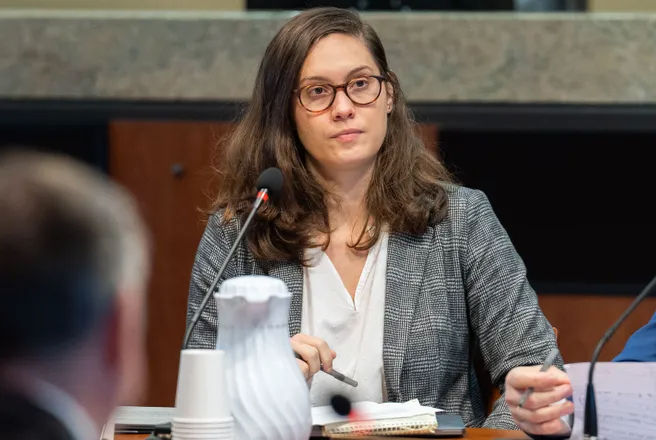
Follow-Up: Representative Allison Tant said you proposed a taxing authority of some sort. What’s that about?
Bugra Demirel: That’s completely false. I’ve never proposed any kind of taxing authority — not in conversation, not in writing, not anywhere. What I did mention was the Tampa General model, which was originally brought up in September by Commissioner Jack Porter, not me. Tampa General has a taxing authority that was created decades ago by state legislators, but that’s not what’s being discussed here in Tallahassee.
The beauty of the FSU–TMH partnership is that we don’t need a taxing authority. FSU will foot the bill. That’s why we need this, and that’s exactly what I told Allison Tant.
What’s unfortunate is that instead of clarifying with me directly, Allison Tant went online and misrepresented our private conversation. That’s the kind of political spin that distracts the public from the real issue, improving healthcare access and quality for the people of this region.
Q9. If you could sit down with TMH leadership tomorrow, what would you want them to hear directly from you? And what about FSU leadership?
Bugra Demirel: To TMH leadership, I’d say this: the community believes in the hospital’s potential. You’ve built something meaningful over the decades — no one is denying that — but now it’s time to evolve. Partner with FSU in good faith and let this be your legacy. If this partnership succeeds, everyone wins, the doctors, the staff, and most importantly, the patients.
To FSU leadership, I’d say: stay focused, stay patient, and keep communicating clearly with the public. This is bigger than a couple of individuals who want to hold onto their power. It’s about building an academic medical center that will define Tallahassee’s next generation of healthcare. Do it right, and history will remember this moment as the turning point for Florida State University and our community.

Q10. Do you think the public has been given enough information to form an informed opinion about the FSU–TMH partnership?
Bugra Demirel: I think there’s been a lot of noise, a lot of politics, and a lot of speculation, particularly PR spins claiming the Governor will control TMH, which is absolutely not true under the proposed MOU. There’s been very little straightforward information. That’s part of why Grow Tallahassee stepped in, to help people cut through the spin and understand what’s actually on the table.
Q11. What do you say to residents who just want better healthcare and are tired of the political back-and-forth?
Bugra Demirel: I completely understand that feeling. Most people don’t care about the politics, they just want to know that when their family needs care, they can get it right here in Tallahassee without having to drive to Gainesville or Jacksonville. That’s what this is really about. We are on the same side.
Q12. You’ve been a business owner and community advocate for years. What personally drives you to take such an active role in local issues like this?
Bugra Demirel: I’ve lived in Tallahassee for two decades. This is where I built my businesses, where my wife and I are raising our kid, and where I’ve watched this city grow from a small college town into a mid-sized community with real potential. I care about what happens here.
We don’t do this for recognition. But I realized a long time ago that someone has to do this work, otherwise, short-sighted people will keep holding our city back. Remember the famous line from Harvey Dent: “You either die a hero or you live long enough to see yourself become the villain.”
All jokes aside, I get tremendous support for what we do at Grow Tallahassee. 99% of it isn’t public. It’s the phone calls, text messages, and quick comments at the grocery store like, “Hey, keep doing what you’re doing.” Especially with the TMH issue, I’ve received very supportive calls from former board members, doctors, nurses, bankers, real estate professionals, the list goes on. All that support tells me we’re doing the right thing for this community.
Q13. What’s your ultimate goal in all of this, what do you want to see happen for Tallahassee and its healthcare future?
Bugra Demirel: My goal is simple: I want this partnership finalized so Tallahassee can finally have the world-class healthcare system it deserves. The FSU–TMH partnership can be the catalyst that transforms not only how care is delivered but how this community grows. It means better doctors, stronger research, modern facilities, and fewer people having to leave town for treatment. If we get this right, it’s going to lift the entire region, from the medical field to the local economy. It’s about creating opportunity, confidence, and pride in our city again.
We’ve settled for “good” for too long. It’s time for Tallahassee to aim for “great”, and deliver the kind of excellence our residents deserve.
Disclaimer: This interview was conducted as part of a community Q&A arranged by local public relations professionals who requested to remain confidential in order to protect their employer in the private sector. All responses reflect the personal views of Bugra Demirel and not any affiliated organization or institution.

Comments