
From Strategy to Execution | Opinion Part 2
- Bugra Demirel

- 6 days ago
- 4 min read
Updated: 6 days ago

In Part 1, I laid out a simple reality: Tallahassee doesn’t suffer from a lack of ideas. It suffers from a lack of alignment across leadership in both the public and private sectors.
We’ve identified the constraints. We’ve studied the industries. We’ve talked about growth.
The question now is simple: what are we actually going to do about it?
Execution requires structure. It requires focus. And it requires a willingness from both the public and private sectors to move beyond commentary and into coordinated action.
Over the years, through Grow Tallahassee, we’ve advocated for many of these issues, sometimes publicly, sometimes behind the scenes. What’s been missing is not awareness. It’s structure, coordination, and sustained unification among our leaders.
If we’re serious about growing Tallahassee’s economy, the path forward is not complicated. It starts with getting three things right: where people live, where they work, and why they stay.

1) Live: Increase housing supply through smart zoning reform
If we want real economic growth, we have to start with housing.
Tallahassee’s supply is constrained, not just in volume, but in variety. That limits who can move here, who can stay here, and how fast the economy can expand.
The economics of building are straightforward. Much of a project’s cost sits in site infrastructure: roads, sidewalks, parking, stormwater, setbacks, and landscaping. Whether a two-acre site produces six homes or ten, a large share of those costs doesn’t change.
But the math does.
At six homes, those costs are spread across six buyers. At ten, across ten. That difference determines price, feasibility, and whether projects get built at all.
This is where zoning matters.
If we want more attainable housing, we have to allow more efficient use of land, particularly in areas already served by public infrastructure.
Action Items:
Prioritize the next comprehensive plan amendment cycle to allow higher by-right density (duplexes, townhomes, small multifamily),
Reduce minimum lot sizes and setbacks where public infrastructure already exists,
Continue establishing fast-track approvals for projects that add workforce housing,
Align stormwater and parking standards with infill realities, not greenfield assumptions,
Allow more private sector and technology participation in plan review and inspection process to improve timelines.
This isn’t about overbuilding. It’s about creating reasonable conditions so the market can actually deliver homes.
If housing doesn’t scale, the economy doesn’t either.

2) Work: Build around two industries and execute
We don’t need ten industries. We need two or three we can execute on relentlessly.
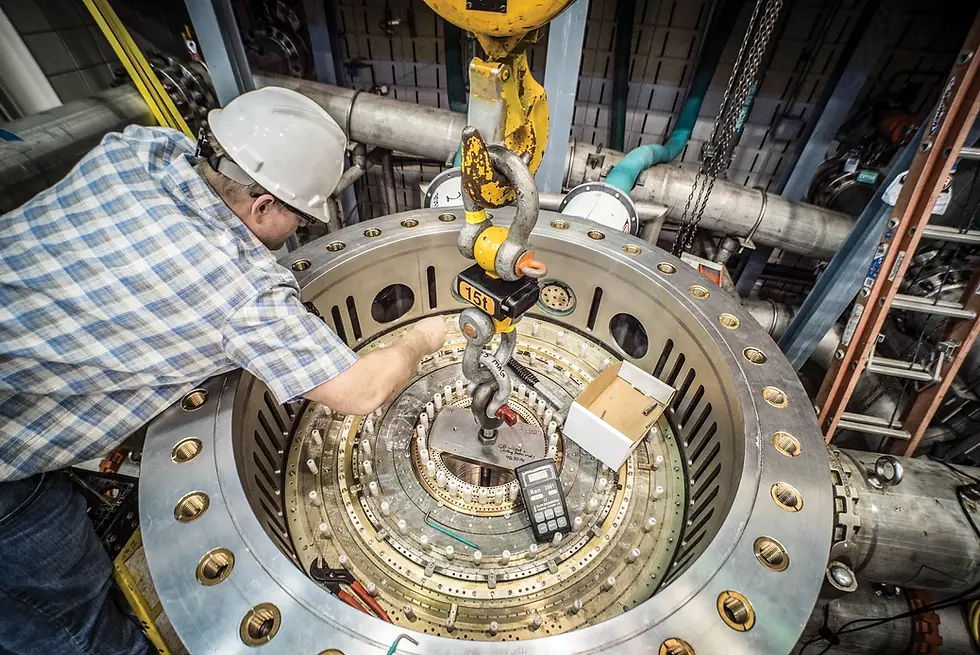
Right now, Tallahassee has two clear opportunities: Healthcare and Biomedical services, and advanced manufacturing driven by the National High Magnetic Field Laboratory.
They require different strategies, but both have the potential to anchor real economic growth. The goal is to build clusters around each.
Healthcare and Biomedical Services (FSU Health)
We already have the foundation: a growing healthcare system, institutional backing, and a pipeline of talent.
Action:
Formalize a Health Working Group including FSU, FAMU, TSC, TMH, private providers, investors, and OEV
Build a recruitment pipeline for specialty providers, outpatient networks, clinical research organizations, pharmaceutical and health-tech companies
Align training and residency programs with investments and local employer demand
Identify and prepare sites for medical office and clinical expansion
MagLab & Advanced Research Ecosystem
This is about specialization and high-value industry. Very few cities have an asset like the National High Magnetic Field Laboratory. Even fewer build around it.
This is an asset that should continue to leverage deliberately.
Action:
Double down on Research & Innovation Working Groups tied to the MagLab, OEV and university system
Continue to target recruitment of materials science companies, advanced manufacturing firms, and R&D-driven companies
Support and expand existing industry players, including companies like Danfoss
Develop pre-permitted sites or facilities tailored to research and light industrial users
Strengthen commercialization pathways from university research to private sector application

3) Stay: Compete on place, and make people choose Tallahassee
People don’t just choose jobs, they choose where they want to live.
If we want to attract and retain talent, Tallahassee has to become a place people actively choose, not just where they happen to end up. This is about lifestyle competitiveness.
A functional, active downtown is essential. It serves as the center of gravity for talent, business activity, and identity. At the same time, retention is driven by the everyday experience: where people spend their time, how they move through the city, and whether they can build a happy life here. Lastly, airport connectivity is critical, and access to markets, clients, and talent depends on it.
Action:
Retail follows rooftops. Enable higher residential density around the urban center to support consistent activity.
Prioritize restaurant and retail clustering to create real destinations
Continue to support year-round downtown activation through events and programming
Prioritize airline routes that connect to major hubs
Ensure policies allow small businesses—especially in food, entertainment, and retail—to open and scale without unnecessary permitting friction.
Closing
Tallahassee has the assets. It has the institutions. It has the foundation. Many of the ideas outlined here aren’t new. Those of us who have been working to grow this city have heard them before, and in some cases, they’re already in motion.
What’s been missing is consistency.
In business, success ultimately comes down to three things: the idea, the resources, and the execution. In Tallahassee’s case, we have the ideas. We have the resources. The third is where we fall short.
Growth doesn’t come from commentary. It comes from sustained, coordinated action.
The path forward is clear.
We can keep talking about it.
Or we can execute.
This article is an opinion piece by Bugra Demirel, a longtime Tallahassee resident, entrepreneur, and community advocate. A graduate of Florida State University and Tallahassee State College, Bugra was inducted into the Tallahassee State College Alumni & Friends Hall of Fame in 2024 and honored as a Seminole 100 recipient for leading Demirel International—one of the fastest-growing businesses owned by an FSU alumnus. His company holds investments across retail, hospitality, manufacturing and commercial real estate industries.


Comments